










Not all LED lights provide the same level of visual comfort.
Two fixtures may have similar brightness, colour temperature, and power consumption, yet one feels pleasant while the other causes discomfort after just a few minutes. The difference often comes down to glare.
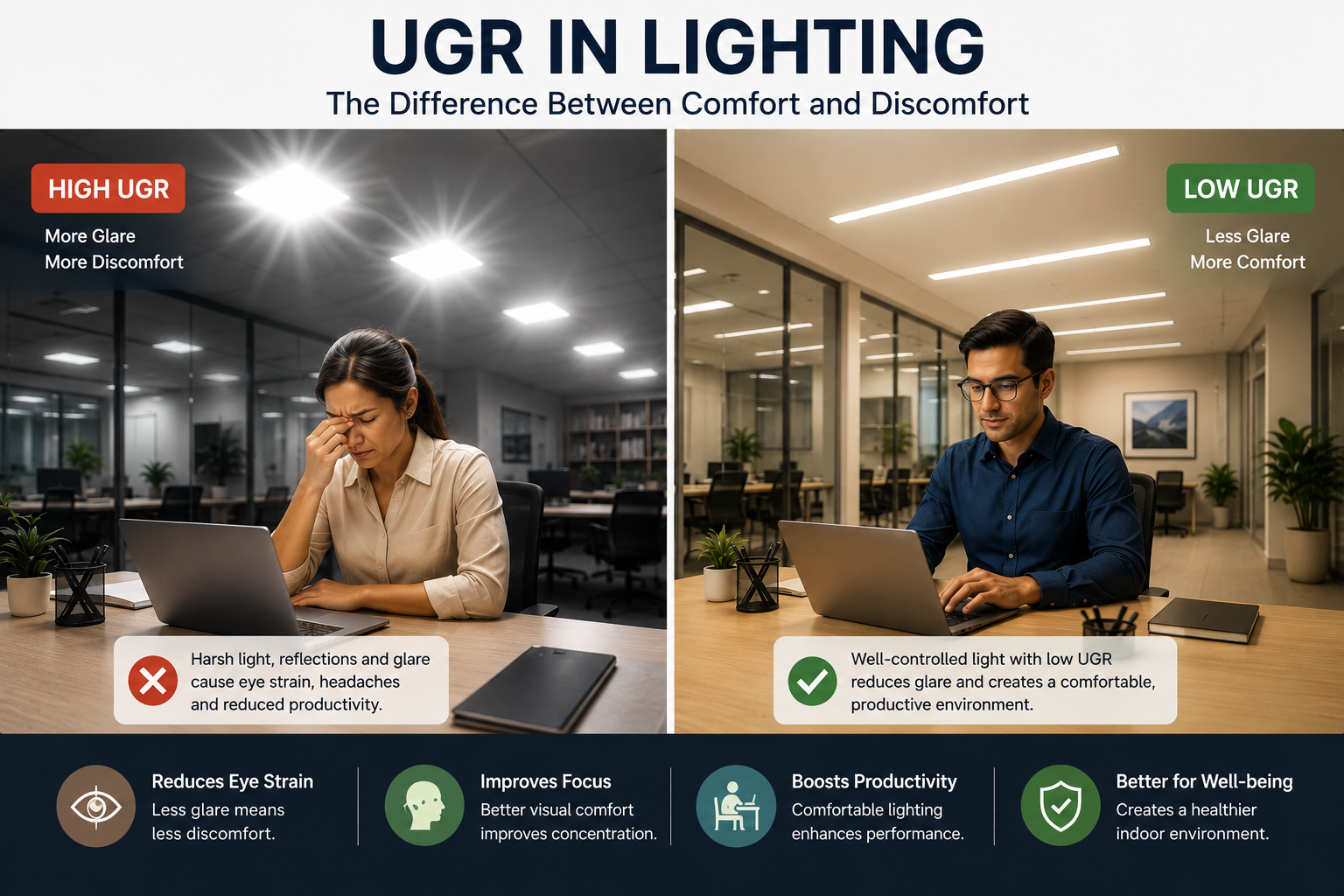
Have you ever looked up at a ceiling light and felt it was too harsh on your eyes, even though the room wasn’t overly bright? Glare can make it uncomfortable to work, read, use digital screens, or spend long hours in a space, even when the lighting appears bright enough.
Whether you’re designing an office, classroom, retail store, hospital, or even a modern home, understanding UGR (Unified Glare Rating) can help you choose lighting that is both functional and visually comfortable.
In this guide, we’ll explain what UGR is, why it matters, and how to choose lighting with the right glare rating for different applications.
What is UGR in Lighting?
UGR (Unified Glare Rating) is a standard used to measure the level of discomfort glare produced by a lighting fixture.
In simple terms, it indicates how likely a light is to cause visual discomfort when viewed from a normal position.
The lower the UGR value, the more comfortable the lighting is. A higher UGR value means the light is more likely to create glare, which can lead to eye strain and reduced visual comfort.
Although UGR is commonly used in commercial lighting, it’s also an important consideration for homes where people spend long hours working, reading, or using digital screens.
What is Glare?
Glare occurs when a light source appears excessively bright compared to its surroundings, making it uncomfortable to look at.
Common examples include:
- A ceiling light reflecting directly into your eyes
- Bright office lights cause discomfort while working on a computer
- Poorly positioned spotlights are creating harsh reflections
- Glossy surfaces reflecting intense light
Glare doesn’t necessarily mean a light is brighter—it simply means the light is distributed in a way that causes discomfort.
Why is UGR Important?
Lighting should help people see clearly without causing discomfort.
Choosing fixtures with an appropriate UGR can provide several benefits:
- Reduces eye strain during long working hours
- Creates a more comfortable environment
- Improves concentration in offices and classrooms
- Minimizes unwanted reflections on computer screens
- Enhances the overall lighting experience
For architects and interior designers, UGR is an important factor when creating spaces where people spend extended periods of time.
Understanding UGR Ratings
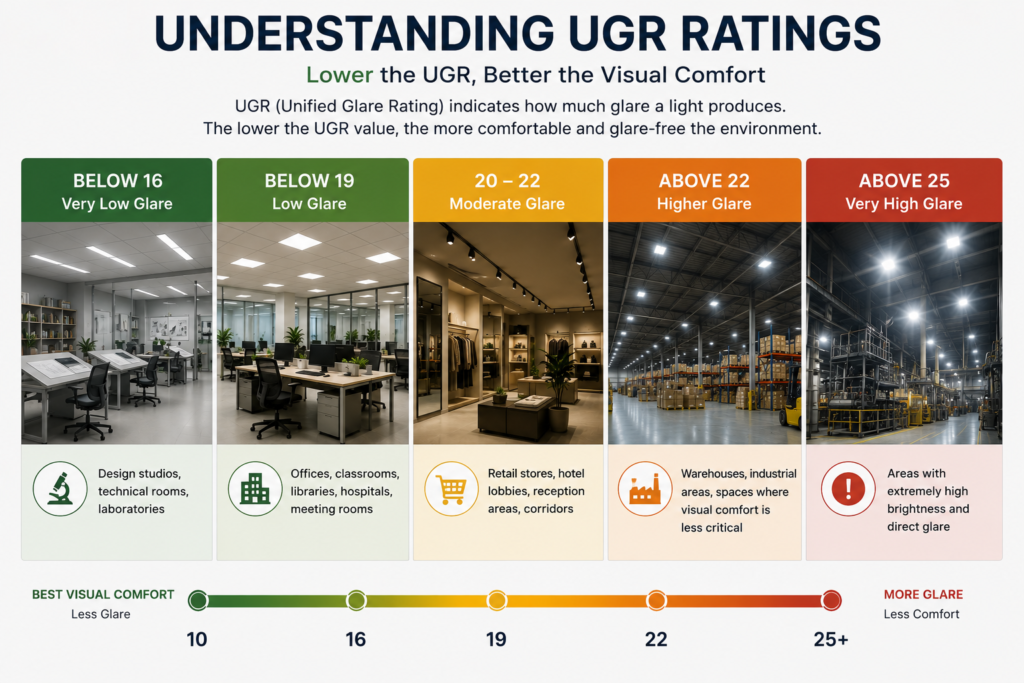 UGR values generally range from 10 to 30, with lower numbers indicating less glare.
| UGR Rating | Glare Level | Recommended Applications |
|---|---|---|
| Below 16 | Very Low Glare | Design studios, technical work |
| Below 19 | Low Glare | Offices, classrooms, hospitals, libraries |
| 20–22 | Moderate Glare | Retail stores, hotel lobbies, and reception areas |
| Above 22 | Higher Glare | Warehouses, industrial spaces where visual comfort is less critical |
For office environments, UGR <19 is widely recommended because it provides a comfortable viewing experience, especially for people working on computers.
Does Lower UGR Always Mean Better Lighting?
Not always. The ideal UGR depends on how a space is used.
For example:
- An office requires low-glare lighting because employees spend hours looking at computer screens.
- A warehouse or storage area may not require such strict glare control.
- Retail spaces often balance visual comfort with accent lighting to highlight products.
Instead of choosing the lowest UGR available, it’s better to select a lighting solution that matches the needs of the space.
What Affects UGR?
Several factors influence how much glare a lighting fixture produces.
-
Fixture Design
The shape of the reflector and diffuser plays a major role in controlling glare. Well-designed fixtures distribute light more evenly and reduce direct brightness.
-
Beam Angle
A very narrow beam can create intense, concentrated light, while a wider beam distributes light over a larger area. Choosing the right beam angle helps improve visual comfort.
If you’re unfamiliar with beam angles, read our guide on What is Beam Angle in Lighting? to understand how light spread affects different spaces.
-
Mounting Height
Lights installed too close to eye level may feel more glaring than fixtures mounted at an appropriate height.
-
Surface Reflections
Glossy floors, glass partitions, and polished furniture can reflect light, increasing perceived glare.
Which LED Lights Commonly Offer Low UGR?
Many modern LED fixtures are designed with glare control in mind.
Some common examples include:
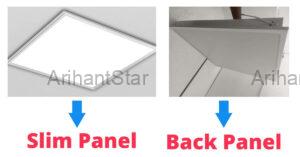
- LED Panel Lights for offices, classrooms, and meeting rooms
- Recessed COB Lights with deep reflectors for controlled lighting
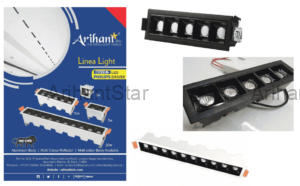
- Linear Profile Lights used in commercial interiors
- Suspended Linear Lights for modern workspaces
When selecting these fixtures, it’s worth checking the manufacturer’s specifications to see if a UGR rating is provided.
UGR vs CRI
UGR and CRI work together but serve different purposes.
- UGR focuses on visual comfort.
- CRI (Colour Rendering Index) measures how accurately colours appear under a light source.
For workplaces, retail stores, and showrooms, choosing both a suitable UGR and a high CRI can improve the overall lighting experience.
Learn more in our article, What is CRI in Lighting? Why It Matters More Than You Think.
Common Mistakes to Avoid
When selecting LED lighting, avoid these common mistakes:
- Choosing fixtures based only on wattage
- Ignoring UGR for office or study spaces
- Using highly reflective fixtures where glare control is important
- Installing lights at unsuitable heights
- Assuming all LED panels offer the same glare performance
Taking these factors into account can make a noticeable difference in both comfort and productivity.
Frequently Asked Questions
-
Is a lower UGR better?
Generally, yes. Lower UGR values indicate less glare and greater visual comfort, especially in workspaces.
-
Can UGR reduce eye strain?
Yes. Lighting with a lower UGR can reduce visual discomfort, making it easier to work, study, or use digital screens for extended periods.
-
What is the recommended UGR for offices?
Most offices, classrooms, and similar work environments recommend UGR <19 for comfortable lighting.
-
Does UGR matter in homes?
Yes. Home offices, study rooms, kitchens, and reading areas can all benefit from low-glare lighting.
-
Does beam angle affect glare?
Yes. Beam angle influences how light is distributed, which can impact perceived glare and visual comfort.
-
Do all LED lights have a UGR rating?
Not always. UGR ratings are more commonly provided for professional and commercial lighting products. If glare control is important, check the manufacturer’s technical specifications before purchasing.
-
Is UGR 19 good?
Yes. UGR 19 is widely considered the recommended glare rating for offices, classrooms, libraries, and other workplaces where people spend long hours reading, writing, or working on computers.
Lighting fixtures with a UGR below 19 help reduce visual discomfort and eye strain, creating a more comfortable environment for everyday tasks.